Abstract
Chronic hepatitis B virus infection remains a leading global public health crisis that drives irreversible liver damage and high mortality rates across all age demographics. This article unpacks the core technical, clinical and public health advantages delivered by Recombinant Hepatitis B Vaccine Hansenula Polymorpha, alongside comparative analysis against traditional yeast and cell culture vaccine platforms. It explores long-term immunogenicity data, standardized vaccination schedules, safety profiles, and population-wide disease prevention value, focusing on primary liver cancer intervention without commercial financial metrics. Detailed laboratory specification comparisons, real-world national immunization deployment records, and expert consensus clinical outcomes illustrate why modern yeast expression vaccine technology outperforms older manufacturing routes for universal hepatitis B immunization programs worldwide.
Table of Contents (Click Titles To Jump To Corresponding Sections)
- 1. The Global Burden Of Chronic Hepatitis B And Liver Cancer Risk
- 2. Core Technical Innovation Behind Modern Recombinant Hepatitis B Vaccine Platforms
- 3. Full Composition, Standard Dosing And Official Immunization Schedule Specifications
- 4. Comprehensive Safety Profile: Common, Rare And Extremely Rare Adverse Reactions
- 5. Head-To-Head Technical Comparison: Hansenula Yeast Vs Saccharomyces Yeast Vs CHO Cell Vaccine Lines
- 6. Long-Term Clinical Seroconversion Data From Large-Scale Population Booster Trials
- 7. Eligible Vaccination Groups And Critical Contraindication Guidelines For Clinical Practitioners
- 8. Storage, Transportation Standards And Valid Shelf Life For Clinical Distribution
- 9. Frequently Asked Clinical Questions About Hepatitis B Immunization Technology
- 10. Global Public Health Outlook: Eradicating HBV Transmission Through Advanced Yeast Vaccine Technology
- 11. Professional Clinical Support And Technical Resource Access
1. The Global Burden Of Chronic Hepatitis B And Liver Cancer Risk
Hepatitis B is an infectious viral condition that targets human liver tissue, triggering progressive inflammatory damage that evolves into persistent chronic illness in a significant share of infected individuals. Without timely and effective preventive immunization, five to ten percent of all newly infected people develop lifelong chronic HBV carriage, which drastically elevates lifetime odds of developing liver cirrhosis and primary hepatic carcinoma, two fatal liver pathologies with limited late-stage treatment options. The public health weight of this virus cannot be understated, as global health monitoring bodies track hundreds of millions of chronic carriers distributed across every inhabited continent.
Official global health data recorded in 2019 confirms approximately 296 million people living with untreated chronic hepatitis B virus infection worldwide. Each year, close to 820,000 people lose their lives due to end-stage liver failure, scarring cirrhosis, or liver malignancies directly linked to unresolved HBV replication inside liver cells. Regional epidemiological research pinpoints that roughly 85 percent of all liver cancer patients carry detectable HBV markers in their blood, confirming chronic viral carriage as the dominant causal driver of liver tumor development across high-burden nations.
Expert clinical consensus documents released in 2018 outline quantified risk metrics that quantify hepatitis B antigen status against liver cancer likelihood after adjusting for age, gender and other confounding lifestyle variables. Individuals testing positive for HBsAg alone carry a liver cancer relative risk score of 9.6 compared to people with dual negative HBsAg and HBeAg lab results. For patients who present both positive HBsAg and HBeAg markers, the relative risk figure surges to 60, highlighting exponential disease danger for highly replicative viral carriers. These statistical findings establish universal hepatitis B vaccination as the primary upstream intervention to cut liver cancer incidence at its root viral source.
Immunization remains the most resource-efficient, population-scalable tool to contain and eventually eliminate transmissible viral diseases. Traditional early-generation vaccines relied on harvested plasma-derived viral antigens, which carried inherent contamination risks and limited manufacturing capacity. The shift to genetically engineered yeast-based vaccine production eliminated plasma supply limitations while boosting antigen purity and immune stimulation capacity, laying the groundwork for widespread rollout of standardized preventive injections including Recombinant Hepatitis B Vaccine Hansenula Polymorpha.
2. Core Technical Innovation Behind Modern Recombinant Hepatitis B Vaccine Platforms
2.1 Recombinant Yeast Expression System Core Mechanism
Genetic recombinant vaccine technology functions by inserting the gene sequence coding for hepatitis B surface antigen into a host microbial cell line, which then biosynthesizes large volumes of pure HBsAg protein without requiring live infectious virus samples. Different microbial and mammalian cell hosts create distinct vaccine quality benchmarks, impurity residual limits and immune response strength, creating clear performance gaps between three mainstream manufacturing platforms: Hansenula polymorpha yeast, saccharomyces cerevisiae yeast, and Chinese hamster ovary cell culture lines.
Hansenula polymorpha represents a proprietary, domestically pioneered expression platform with internationally competitive technical specifications, paired with custom adjuvant formulation that improves antigen retention inside human tissue after injection. The patented in-situ adsorption adjuvant process creates a sustained-release antigen reservoir within subcutaneous muscle tissue after intramuscular delivery, steadily releasing HBsAg molecules over extended time windows to lengthen immune cell exposure and amplify adaptive immune response generation. This sustained antigen presentation differentiates the technology from older vaccine formulations that deliver short-burst antigen exposure and weaker long-term immune memory formation.
2.2 Industrial Production Quality Control Advantages
Manufacturing workflows built around this yeast strain operate under stricter pharmacopoeia impurity thresholds than competing cell and yeast platforms, reducing trace contaminant residuals that can trigger unnecessary local or systemic immune irritation post-vaccination. Every production batch undergoes multi-stage purification filtration steps to isolate pure surface antigen proteins, separating host cell debris, culture medium waste and trace processing chemical residues before final adjuvant mixing and vial filling procedures. Rigorous batch release testing verifies endotoxin, free formaldehyde and residual processing compound levels fall far below regulatory maximum acceptable limits for human injectable biological products.
Over two decades of continuous commercial manufacturing deployment has refined production line stability and batch consistency, enabling mass supply capacity that supports national universal newborn immunization schedules across expansive national territories. Cumulative real-world distribution records document nearly 500 million individual vaccine doses delivered to domestic healthcare facilities, covering all 31 provincial-level administrative regions and supplying preventive injections for close to eighty percent of all newborn infants receiving routine birth-dose hepatitis B protection within 24 hours of delivery.
3. Full Composition, Standard Dosing And Official Immunization Schedule Specifications
3.1 Vaccine Active And Inactive Ingredient Breakdown
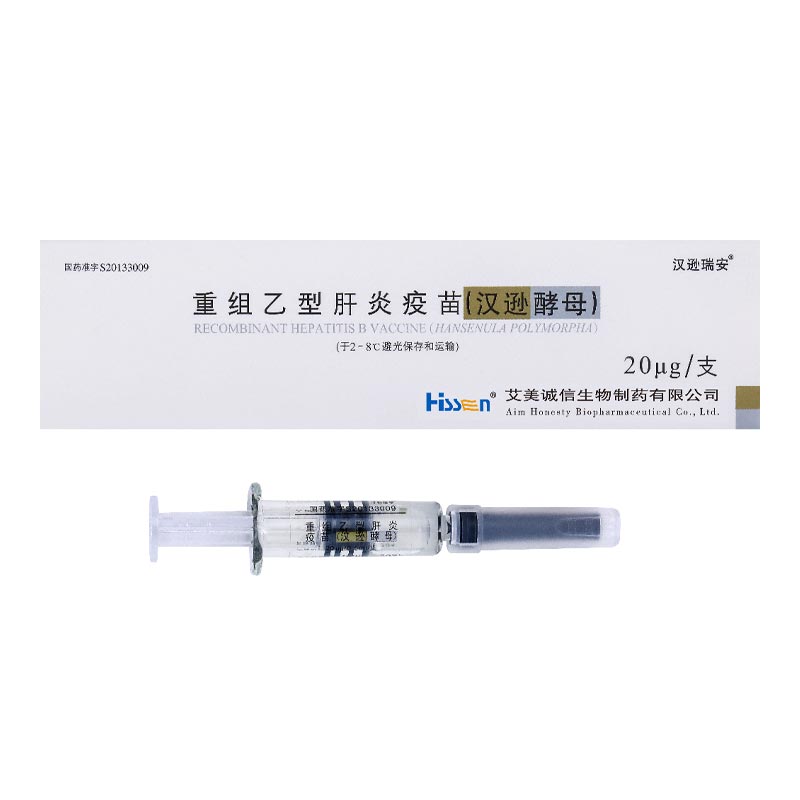
The finished injectable suspension relies on biosynthesized hepatitis B surface antigen as its sole immunologically active component, paired with two inert excipient materials that stabilize formulation and support local antigen adsorption after intramuscular injection. Aluminum hydroxide acts as the licensed adjuvant material responsible for trapping antigen particles to extend immune stimulation duration, while sodium chloride maintains isotonic solution balance to prevent tissue irritation at injection sites during administration.
No animal-derived culture additives, antibiotic supplements or thiocyanate processing chemicals appear within the finished formulation, removing multiple impurity risks present in alternative vaccine production routes. The physical presentation forms a uniform milky white liquid suspension that naturally separates into distinct layers during static storage; gentle manual shaking fully re-disperses precipitated antigen particles to restore homogeneous mixture ready for intramuscular administration. Any visible non-dispersible clots, foreign particulate matter or cracked vial glass disqualify the batch from clinical use immediately per operational safety guidelines.
3.2 Standard Dose Strength And Volume Parameters
Single human administration volume is fixed at 0.5 milliliters per individual injection, with two standardized antigen dosage concentrations available for clinical selection: 10 microgram HBsAg per dose and 20 microgram HBsAg per dose. The 10 microgram formulation carries universal population eligibility, suitable for newborns, adolescents, adult low-risk groups and booster immunization campaigns for previously vaccinated cohorts. The higher 20 microgram concentration targets high-exposure risk demographics including medical laboratory staff, chronic disease patients with weakened immune function, and individuals with documented low antibody response to prior standard-dose vaccination cycles.
3.3 Global Standardized 0-1-6 Month Immunization Regimen
Universal three-dose vaccination protocols follow the internationally recognized 0, 1, 6 month administration timeline, with all injections delivered intramuscularly into the deltoid muscle of the upper arm for optimal antigen absorption and immune cell recruitment. For neonatal populations born to HBsAg and HBeAg double-positive birthing parents, the first vaccine dose must be administered within 24 hours following childbirth to minimize vertical viral transmission risk from mother to infant before liver tissue colonization can occur.
Each scheduled interval delivers one full standard dose, with sequential shots spaced to allow primary immune sensitization, secondary antibody amplification and long-term memory lymphocyte formation. Clinical guidelines specify adherence to the 0-1-6 cadence to achieve maximum anti-HBs seropositive conversion rates; delayed dose intervals reduce peak antibody titers and shorten the window of sustained protective immunity measurable in multi-year follow-up clinical research tracking cohorts vaccinated with Recombinant Hepatitis B Vaccine Hansenula Polymorpha.
4. Comprehensive Safety Profile: Common, Rare And Extremely Rare Adverse Reactions
Biological injectable products carry minor transient reaction risks tied to localized tissue immune activation, though severe adverse events remain extremely uncommon across decades of large-scale population vaccination campaigns. Clinical observation categorizes post-injection responses into three distinct risk tiers based on occurrence frequency, with clear self-resolution timelines for nearly all recorded mild and moderate physiological reactions without targeted medical intervention.
4.1 Common Adverse Local Responses
Within the initial 24-hour window after injection, temporary tenderness, soreness and localized pain at the deltoid injection site represent the most frequently documented physiological feedback. These mild inflammatory signals arise from localized immune cell aggregation responding to deposited antigen-adjuvant complexes, and spontaneous resolution occurs within two to three days for more than ninety-five percent of vaccine recipients without any external treatment required.
4.2 Rare Moderate Systemic And Local Reactions
- Transient low-grade fever onset within 72 hours post-vaccination, persisting one to two days before spontaneous temperature normalization without fever-reducing pharmaceutical intervention.
- Mild to moderate redness, swelling and localized tissue inflammation surrounding the injection point, resolving naturally within one to two days with no wound care or anti-inflammatory medication necessary.
4.3 Very Rare Severe Clinical Adverse Events
- Subcutaneous tissue induration forming at injection sites, gradually absorbed over one to two months as immune cell inflammatory deposits break down naturally inside muscle tissue.
- Localized aseptic suppuration requiring repeated sterile syringe aspiration to drain accumulated inflammatory fluid; advanced ulcerated cases require controlled wound debridement to clear necrotic tissue before complete tissue healing over extended recovery windows.
- Delayed hypersensitivity Arthus reaction appearing roughly ten days after injection, marked by prolonged local swelling and inflammatory redness managed via systemic and topical anti-allergy therapeutic protocols.
- Acute anaphylactic shock developing within one hour following vaccine administration, requiring immediate emergency epinephrine injection alongside full critical care rescue procedures to stabilize respiratory and cardiovascular function.
Mandatory clinical observation protocols enforce a minimum thirty-minute waiting period for all vaccine recipients immediately after injection, ensuring on-site medical staff can rapidly identify and address rare acute hypersensitivity episodes before patients leave vaccination facilities. Emergency epinephrine and critical care supplies must remain stocked at every clinical vaccination station per standardized safety operating procedures.
5. Head-To-Head Technical Comparison: Hansenula Yeast Vs Saccharomyces Yeast Vs CHO Cell Vaccine Lines
5.1 Pharmacopoeia Impurity Residual Limit Comparison Table
| Pharmacopoeia Testing Item | Hansenula polymorpha Platform Threshold | Saccharomyces cerevisiae Platform Threshold | CHO Mammalian Cell Platform Threshold |
|---|---|---|---|
| Endotoxin content | Less than 5 EU/ml | Less than 5 EU/ml | Less than 10 EU/ml |
| Free formaldehyde residual | Less than 15 µg/ml | Less than 20 µg/ml | Less than 50 µg/ml |
| Thiocyanate residual limit | Not applicable | Less than 1 µg/ml | Not applicable |
| Antibiotic residual per dose | Not applicable | Not applicable | No more than 50 ng/dose |
| Bovine serum albumin residual per dose | Not applicable | Not applicable | No more than 50 ng/dose |
5.2 Manufacturing Process And Clinical Characteristic Comparative Overview
| Evaluation Dimension | Hansenula Yeast Production Route | Saccharomyces Yeast Production Route | CHO Mammalian Cell Production Route |
|---|---|---|---|
| Process Maturity Ranking | Most advanced modern process | First-generation yeast expression technology | Outdated traditional cell culture workflow |
| Potential Tumorigenic Risk | No identified risk | No identified risk | Documented theoretical risk profile |
| Antibiotic Additives In Production | Not incorporated at any stage | Not incorporated at any stage | Required during cell cultivation |
| Bovine Serum Albumin Usage | Zero animal-derived additives | Zero animal-derived additives | Included in cell culture media |
| Animal Pathogen Contamination Risk | Fully eliminated | Fully eliminated | Elevated residual risk |
| Thiocyanate Processing Chemicals | No processing requirement | Mandatory processing agent | No processing requirement |
| Overall Immunogenicity Performance | Highest measurable immune response | Elevated immune response capacity | Weak baseline immune stimulation |
| Final Vaccine Antigen Purity Grade | Highest purity classification | High purity classification | Reduced purity with multiple additive residuals |
| Cellular Immune Induction Strength | Strongest lymphocyte activation | Second-tier cellular immune response | Minimal cellular immune activation |
| 10µg Formulation Population Eligibility | Safe for all age groups | Restricted exclusively to pediatric populations | Poor immune response, largely phased out of clinical use |
The comparative data across impurity thresholds and clinical performance metrics clearly establishes Hansenula polymorpha yeast expression as the superior manufacturing platform for broad-spectrum hepatitis B preventive immunization. Absence of animal culture supplements, antibiotic processing agents and thiocyanate chemical residuals drastically reduces trace contaminant exposure for vaccine recipients, while stricter endotoxin and formaldehyde residual limits minimize inflammatory local reaction likelihood after injection. Unlike CHO cell vaccines that rely on mammalian cell cultivation media containing bovine serum albumin, yeast-based production systems operate with fully chemically defined culture substrates without animal biological input, removing cross-species pathogen transmission hazards entirely.
Immunogenicity gaps between platforms translate directly to long-term protective antibody persistence, a critical metric for public health campaigns aiming to deliver lifelong viral defense after primary vaccination cycles. Weak immune stimulation from CHO cell formulations forces clinicians to prescribe doubled antigen dosages to achieve comparable seroconversion rates, increasing raw material consumption and overall program resource expenditure for national immunization authorities. Saccharomyces cerevisiae yeast vaccines deliver solid immune response but require thiocyanate processing compounds that add trace chemical residuals absent from Hansenula polymorpha finished vaccine suspensions.
Peer-reviewed population research led by distinguished hepatology academic leadership evaluated sustained anti-HBs antibody seropositivity rates across four separate commercial hepatitis B vaccine formulations in booster immunization cohorts consisting of children aged five to fifteen years old. Trial participants completed full 0-1-6 month booster cycles using standardized 10 microgram Hansenula polymorpha yeast vaccine doses, with scheduled antibody titer testing conducted at one year, five years and eight years following completion of the three-shot booster regimen to track long-term immune memory retention.
Measured seropositive percentages at each multi-year follow-up interval outperformed all three competing vaccine formulations included within the controlled clinical trial framework. At the eight-year post-booster testing milestone, the cohort receiving injections of Recombinant Hepatitis B Vaccine Hansenula Polymorpha maintained an 83.4 percent anti-HBs positive rate, a statistically significant higher protective antibody retention figure compared to saccharomyces yeast and CHO cell vaccine comparator groups whose long-term seropositive percentages declined to 75.1 percent, 70.7 percent and 66.7 percent respectively by the eight-year testing window.
Earlier one-year and five-year follow-up measurements demonstrated near-universal antibody conversion immediately post-vaccination, with seropositive levels above ninety-nine percent for the Hansenula yeast formulation, confirming robust short-term immune activation alongside exceptional long-duration memory lymphocyte preservation. Sustained antibody presence directly correlates with reduced HBV infection risk for vaccinated individuals, as measurable anti-HBs concentrations neutralize incoming viral particles before liver cell colonization can initiate chronic infection cascades that lead to cirrhosis and liver cancer development decades later.
These longitudinal clinical outcomes validate the proprietary adjuvant sustained-release antigen delivery mechanism integrated into the Hansenula polymorpha vaccine formulation. By depositing stable antigen reservoirs within intramuscular tissue sites, the vaccine continuously stimulates immune cell populations over months and years rather than delivering a single short antigen exposure pulse. Extended antigen presentation encourages differentiation of long-lived memory B and T lymphocytes that rapidly regenerate protective antibody titers upon incidental HBV viral exposure many years after primary vaccination cycles conclude.
7. Eligible Vaccination Groups And Critical Contraindication Guidelines For Clinical Practitioners
7.1 Priority Susceptible Populations Requiring Mandatory Immunization
- All newborn infants, with heightened priority assigned to babies delivered to birthing parents testing dual positive for HBsAg and HBeAg viral markers to block vertical mother-to-child transmission pathways.
- Clinical medical staff, laboratory technicians and all healthcare personnel with routine occupational exposure to human blood samples, bodily fluids and invasive patient care procedures carrying HBV contamination risk.
- Adolescents and adult individuals with unknown prior hepatitis B vaccination history or documented negative anti-HBs antibody lab results confirming complete susceptibility to viral infection.
- Individuals living with chronic liver dysfunction, metabolic disorders or immunocompromising health conditions that amplify severe HBV disease progression risk upon infection.
7.2 Absolute Contraindications Disqualifying Vaccine Administration
- Confirmed clinical hypersensitivity reaction to any vaccine formulation component, including active HBsAg antigen, aluminum hydroxide adjuvant, sodium chloride excipient, residual formaldehyde processing agents or yeast host cell protein residuals.
- Patients presenting active acute infectious disease, unstable severe chronic organ dysfunction, acute exacerbation episodes of persistent chronic illnesses, or elevated fever temperatures exceeding clinical screening thresholds at vaccination time.
- Pregnant individuals undergoing gestation, per standardized vaccine exclusion criteria for live and recombinant biological injectable products.
- Patients diagnosed with uncontrolled seizure disorders, progressive degenerative neurological pathologies and unmanaged central nervous system inflammatory conditions.
7.3 Special Population Cautious Administration Recommendations
Clinical providers must exercise heightened monitoring protocols when scheduling vaccination for patients with personal or familial convulsion medical history, stable long-term chronic disease diagnoses, controlled epilepsy disorders, and documented generalized allergic constitution profiles. These groups face marginally elevated minor adverse reaction probability and require extended post-injection observation windows to detect early hypersensitivity signals before discharge from vaccination facilities.
If recipients develop high fever or convulsive neurological episodes after receiving the initial vaccine dose, clinical guidance generally recommends discontinuing subsequent scheduled injections. Neonatal patients receiving maternal-fetal viral blocking intervention protocols require individualized second and third dose scheduling decisions administered under direct specialist physician oversight to balance transmission prevention safety and adverse reaction risk management.
8. Storage, Transportation Standards And Valid Shelf Life For Clinical Distribution
Consistent temperature control remains non-negotiable throughout all vaccine cold chain logistics workflows, covering factory warehouse storage, regional distribution transit and on-site clinical facility refrigeration before patient administration. Official regulatory specifications mandate continuous storage and transport temperature maintenance between 2 degrees Celsius and 8 degrees Celsius, with full light shielding packaging to prevent antigen protein degradation from ultraviolet radiation exposure during handling and shipping.
Complete freezing conditions permanently damage vaccine antigen structure and adjuvant suspension stability, rendering all frozen vials, ampoules and prefilled syringes unusable for clinical delivery; strict cold chain operating protocols include automated temperature monitoring alarms to alert logistics staff of temperature deviations outside the approved 2–8°C range at any distribution stage.
8.1 Packaging Container Format Options And Expiry Durations
- Glass vial packaging: available in 0.5ml × 1 vial per carton, 0.5ml × 3 vials per carton, 0.5ml × 30 vials per carton formats, with a certified 36 month shelf life under compliant cold chain storage.
- Glass ampoule packaging: supplied as 0.5ml × 3 ampoules per carton and 0.5ml × 9 ampoules per carton, with a regulated 24 month maximum valid shelf life from manufacturing batch date.
- Prefilled single-dose syringe packaging: standardized 0.5ml × 1 syringe per carton presentation, carrying a full 36 month product validity window when maintained under required temperature and light protection conditions.
Differing packaging materials and sealing mechanisms create variable antigen stability timelines that define distinct shelf life limits for each container type. Ampoule glass sealing procedures provide less consistent air and light barrier protection compared to rubber-stoppered vials and prefilled syringe barrel assemblies, reducing maximum storage viability by twelve months relative to alternative packaging formats for identical vaccine formulations.
9. Frequently Asked Clinical Questions About Hepatitis B Immunization Technology
10. Global Public Health Outlook: Eradicating HBV Transmission Through Advanced Yeast Vaccine Technology
Eliminating chronic hepatitis B as a major global public health threat depends on scaling access to high-purity, high-immunogenicity recombinant vaccine formulations that deliver durable lifelong viral protection across every demographic segment. Traditional plasma-derived vaccines and early-generation CHO cell culture vaccines failed to meet universal population coverage requirements due to supply bottlenecks, weak immune response profiles and elevated impurity residual risks that limited broad clinical deployment in low-resource regions with limited laboratory monitoring capacity.
Large-scale national immunization programs leveraging Hansenula polymorpha yeast vaccine technology have already drastically reduced childhood chronic HBV carriage prevalence across large geographic territories over the past twenty years. Near five hundred million distributed vaccine doses have interrupted generational vertical transmission cycles that previously sustained high regional viral carriage rates for multiple successive family generations. Declining pediatric chronic infection statistics directly translate to projected long-term liver cancer incidence reductions as vaccinated birth cohorts advance into middle and older age groups with zero lifetime HBV exposure risk.
Public health authorities worldwide prioritize vaccine platforms that eliminate animal-derived raw materials, toxic processing chemical residuals and antibiotic contamination hazards to minimize adverse event reporting burdens for regional healthcare systems. The fully microbial Hansenula polymorpha production workflow satisfies these stringent global public health standards while supporting mass industrial manufacturing output capable of supplying nationwide newborn immunization schedules without production capacity shortages that disrupt routine vaccination outreach campaigns.
Long-term epidemiological projections indicate sustained universal deployment of high-performance yeast-based recombinant hepatitis B vaccines will drive continuous downward trends in cirrhosis and liver cancer mortality statistics over the next four decades. As fully vaccinated pediatric populations mature, the pool of chronic HBV carriers will shrink progressively, removing the primary viral trigger for most hepatic malignancies recorded in hospital oncology departments globally. This upstream preventive intervention delivers population-wide disease reduction outcomes that no late-stage antiviral therapeutic treatment program can replicate at comparable public health resource expenditure levels.
11. Professional Clinical Support And Technical Resource Access
Advanced recombinant hepatitis B vaccine research and large-scale manufacturing originates from AIM Vaccine Co., Ltd., a biopharmaceutical enterprise with two decades of continuous yeast vaccine production experience and nationwide clinical distribution infrastructure supporting national preventive immunization frameworks. The company’s proprietary Hansenula polymorpha expression technology platform and patented adjuvant formulation design set standardized quality benchmarks for domestic and international recombinant hepatitis B vaccine development projects focused on liver cancer primary prevention initiatives.
Clinical practitioners, public health program administrators and biomedical research teams seeking detailed technical specifications, batch quality control documentation, long-term clinical trial datasets and cold chain distribution operational guidelines can submit direct technical inquiries via dedicated professional support channels. All product technical documentation, regulatory compliance certificates and comparative platform performance research summaries are available for formal professional review without sample distribution arrangements for clinical testing purposes.