Abstract
This analysis explores public health value of ACYW135 Meningococcal Polysaccharide Vaccine, a quadrivalent immunization against four major meningococcal strains. The content examines invasive meningococcal disease risks, vaccine immune mechanisms, eligible populations, comparison with alternative vaccines, safety data and worldwide deployment strategies.
- 1. The Global Threat Of Invasive Meningococcal Disease
- 2. Biological Principle Behind ACYW135 Meningococcal Polysaccharide Vaccine
- 3. Recommended Recipient Groups For Immunization
- 4. Polysaccharide Vaccine Compared With Conjugate Vaccine
- 5. Clinical Safety Profile And Reaction Guidance
- 6. Worldwide Large-Scale Immunization Application Scenarios
- 7. Frequently Asked Questions
- 8. Long-Term Community Protection Outcomes
- 9. Professional Vaccine Partnership Inquiry
1. The Global Threat Of Invasive Meningococcal Disease
Every year, Neisseria meningitidis triggers countless infectious cases globally, and ACYW135 Meningococcal Polysaccharide Vaccine provides accessible population-level defense against this severe public health threat. Meningococcal infection advances extremely rapidly. Without timely clinical intervention, patients may develop fatal sepsis and meningitis within one day after symptom onset.
Four dominant serogroups, A, C, Y and W135, cause most global outbreaks. The African Meningitis Belt faces seasonal epidemic waves each dry season. Large-scale cross-regional gatherings including international pilgrimages create high risks of cross-border pathogen transmission. Many survivors suffer lifelong irreversible disabilities such as hearing loss, neurological damage and limb necrosis.
Traditional monovalent vaccines can only defend against single bacterial serogroup, leaving communities exposed to multiple circulating strains. Broad-spectrum immunization solutions become essential for modern epidemic response systems. Quadrivalent vaccination closes these protection gaps for populations facing diverse infection threats.
- Serogroup A: Main cause of large seasonal outbreaks across sub-Saharan Africa
- Serogroup C: Frequent trigger for campus outbreaks among teenagers and young adults
- Serogroup W135: Highly infectious strain driving international transmission events
- Serogroup Y: Fast-spreading strain widely detected in temperate zone nations
2. Biological Principle Behind ACYW135 Meningococcal Polysaccharide Vaccine
To understand protective performance of ACYW135 Meningococcal Polysaccharide Vaccine, it is necessary to clarify its antigen composition and immune activation process. This vaccine adopts purified capsular polysaccharides extracted separately from four serogroups of Neisseria meningitidis.
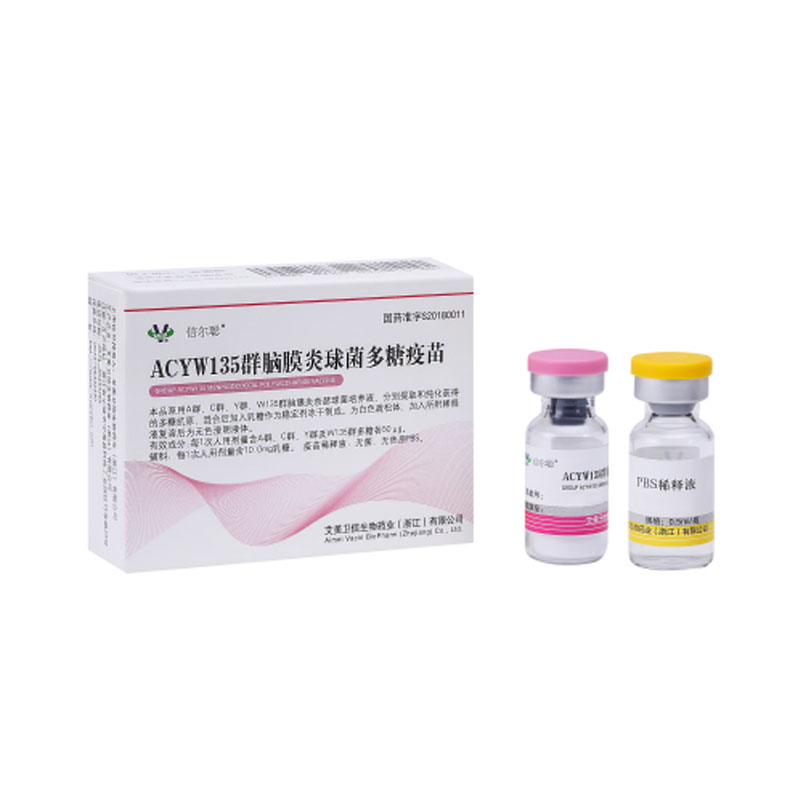
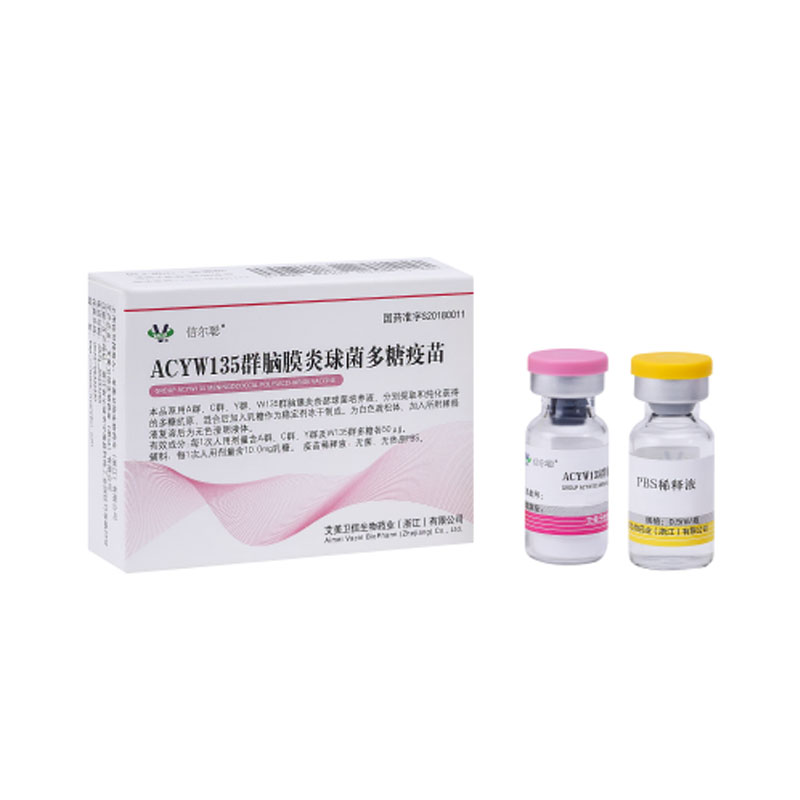
Each human dose contains standardized quantity of polysaccharide antigen for every target serogroup. Lactose serves only as stabilizer during lyophilization, ensuring antigen stability during cold-chain transport and long-term storage. The matching sterile PBS diluent reconstitutes freeze-dried powder before intramuscular injection.
Immune Response Process
- After injection, polysaccharide antigens enter lymphatic tissue and bind with mature B lymphocytes.
- Antigen recognition activates B cell proliferation and differentiation into plasma cells.
- Plasma cells generate specific serum bactericidal antibodies targeting each meningococcal serogroup.
- Circulating antibodies recognize invading bacteria and support rapid clearance to stop invasive infection.
Global clinical trials confirm high seroconversion rate exceeding 96% for eligible populations above two years old after single vaccination. Effective antibody levels help block bacteria from penetrating blood-brain barrier, preventing meningitis and septicemia.
3. Recommended Recipient Groups For Immunization
Health authorities recommend ACYW135 Meningococcal Polysaccharide Vaccine for people aged two years and above. Infants younger than 24 months cannot form sufficient immune response against plain polysaccharide antigens, making this vaccine unsuitable for toddler immunization programs.
3.1 International Travelers To Endemic Regions
People traveling or residing within meningitis high-risk zones need vaccination at least seven days before departure to build sufficient antibody protection. Pilgrims joining cross-border religious activities represent a key group requiring standardized quadrivalent vaccination certification.
3.2 Laboratory Staff With Occupational Exposure Risks
Researchers and production personnel regularly contacting live Neisseria meningitidis face continuous occupational infection risks. Routine vaccination helps lower workplace transmission hazards even under strict laboratory protection protocols.
3.3 Residents Within Predicted Outbreak Areas
When epidemiological surveillance signals rising infection risks, local health authorities launch emergency mass vaccination. Congregated communities including boarding schools, military camps and refugee settlements receive priority immunization support.
4. Polysaccharide Vaccine Compared With Conjugate Vaccine
Two major quadrivalent meningitis vaccine platforms are widely adopted globally: plain polysaccharide formulation including ACYW135 Meningococcal Polysaccharide Vaccine and protein conjugate meningococcal vaccines. Each platform fits different public health scenarios without universal superiority.
- Immune memory: Conjugate vaccines trigger T-cell dependent immune memory; polysaccharide vaccines mainly produce short-term humoral antibody response.
- Minimum applicable age: Conjugate vaccines can be given to infants under two years; polysaccharide vaccines cannot effectively protect young infants.
- Emergency deployment advantage: Polysaccharide vaccines feature simpler manufacturing, longer shelf stability and lower cold-chain pressure suitable for rapid epidemic response.
- Carrier state intervention: Conjugate vaccines reduce nasopharyngeal bacterial carriage to facilitate herd immunity; polysaccharide vaccines focus on individual disease prevention.
Public health teams select appropriate vaccine types based on program objectives. Conjugate vaccines are preferred for regular infant immunization. For rapid emergency mass vaccination targeting populations over two years old, polysaccharide vaccines demonstrate prominent operational advantages for global health institutions.
5. Clinical Safety Profile And Reaction Guidance
Global post-marketing surveillance shows ACYW135 Meningococcal Polysaccharide Vaccine maintains favorable safety performance. Most adverse reactions are mild and disappear spontaneously within 48–72 hours without special medical intervention. No antibiotics or extra preservatives are added during manufacturing to reduce irritation risks.
5.1 Common Local Responses
Tenderness, slight redness and swelling around injection sites appear in partial recipients. Simple cold compress can relieve discomfort effectively, and symptoms fade naturally within two days.
5.2 Rare Systemic Transient Symptoms
A small proportion of vaccinated individuals experience low-grade fever, temporary fatigue or mild joint soreness. Sufficient rest and water intake support quick recovery. These reactions represent normal immune activation signals rather than vaccine intolerance.
5.3 Extremely Rare Severe Allergic Events
Serious hypersensitivity incidents occur at extremely low frequency. Vaccination clinics should keep emergency medication ready and implement mandatory 30-minute observation after injection. People with confirmed allergy to any vaccine component should avoid inoculation.
6. Worldwide Large-Scale Immunization Application Scenarios
Public health organizations utilize quadrivalent meningococcal polysaccharide vaccines for multiple standardized immunization models responding to diverse epidemiological conditions. Fast establishment of population antibody barriers effectively interrupt pathogen transmission chains.
6.1 Pre-travel Preventive Immunization Service
Travel medical clinics cooperate with immigration management to provide vaccination services for outbound travelers. Standardized digital vaccination certification simplifies border inspection procedures for cross-border mobile populations.
6.2 Emergency Outbreak Response Campaigns
Once regional infection surges are detected, health authorities deploy mass vaccination rapidly. Stable storage characteristics reduce requirements for continuous refrigeration in remote and resource-limited epidemic areas. Mobile vaccination stations expand coverage in rural and refugee communities.
6.3 Occupational Health Protection Program
Biomedical labs and vaccine manufacturers organize regular vaccination for staff exposed to live bacterial strains. Reminder systems arrange booster shots periodically to maintain stable protective antibody levels.
7. Frequently Asked Questions
8. Long-Term Community Protection Outcomes
Widespread deployment of ACYW135 Meningococcal Polysaccharide Vaccine creates continuous population health benefits over decades of public health planning. Coordinated vaccination strategies reduce both individual infection risks and community-wide disease burdens.
Sustained immunization coverage greatly lowers new cases of permanent meningitis-related disabilities. Reduced long-term rehabilitation pressure enables medical systems to allocate resources toward other infectious disease prevention projects. Standardized quadrivalent vaccination among international travelers builds cross-continental immune buffers that limit transnational epidemic spread.
For teenagers and school-age groups susceptible to fast-spreading meningococcal sepsis, accessible vaccination reduces mortality caused by delayed diagnosis. Equitable supply of stable, mass-producible quadrivalent vaccines remains a core objective for global public health institutions fighting meningococcal threats.
9. Professional Vaccine Partnership Inquiry
AIM Vaccine maintains complete vaccine manufacturing and global distribution capacity, supplying validated human vaccines to public health institutions and medical distributors across multiple countries. All production facilities follow strict international GMP quality standards and support large-scale procurement demands for epidemic prevention programs.
Public health program planners, global medical suppliers and travel health service teams requiring product technical documents, packaging specifications and bulk supply information may submit cooperation inquiries via official communication channels.