News
Hepatitis B Vaccine Is Not "Effective for Life"! Revaccination Is Needed in This Situation
I. Does having hepatitis B mean a lifetime of stigma and rejection?
Most people who develop hepatitis B are immersed in their own sense of inferiority. Because they fear that people around them will mind, they dare not eat together, dare not have fun together, and dare not confess to the person they like. Despite being extremely careful, they still receive many disdainful looks.
In reality, many people treat hepatitis B as a "flood and beast," as if whoever gets hepatitis B becomes a walking source of liver cancer contagion.
II. Is hepatitis B really that terrible? Let go of prejudice. Hepatitis B may not be as frightening as you think.
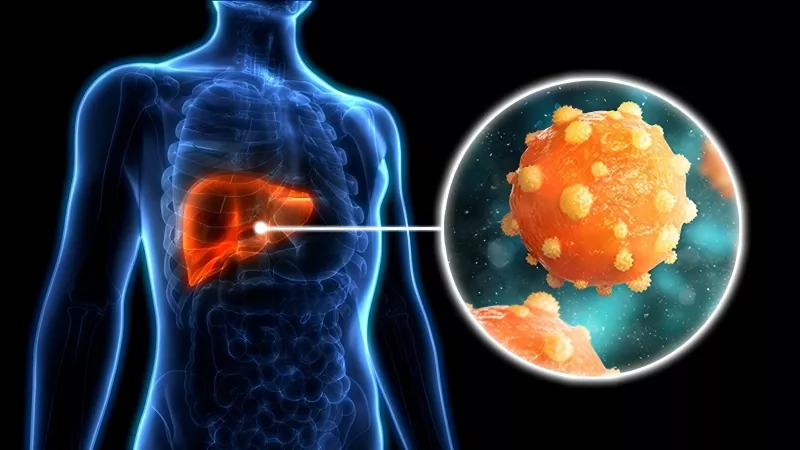
Hepatitis B is an infectious disease caused by the hepatitis B virus (HBV).
The hepatitis B virus has existed on Earth for so long that its origin remains unexplored by humans. In the 1980s, the number of patients surged dramatically due to the following three major factors:
1. Insufficient medical resources and the reuse of needles
2. Unregulated blood donation practices
3. Poor maternal and child healthcare conditions, with the lack of widespread availability of mother-to-child transmission prevention technology for hepatitis B
Data shows that there are currently about 86 million hepatitis B virus carriers in China, of which about 28 million are hepatitis B patients who need treatment.
Seeing this, some people may be confused—aren't hepatitis B virus carriers the same as hepatitis B patients? Actually, these two are not the same thing. When it comes to infectivity, many people probably shudder, but in fact, transmission is not that easy.
Hepatitis B Virus Carrier
Infected with the hepatitis B virus and still contagious. However, liver function remains normal with no obvious symptoms. No medication is required, but close monitoring is still necessary.
Hepatitis B Patient
Contagious, with active inflammation that may even progress to cirrhosis and liver cancer. Treatment is required.
1. "Myth: Can hepatitis B be spread by sharing meals or kissing?"
Hepatitis B virus is mainly transmitted through three routes: blood transmission, sexual transmission, and mother-to-child transmission.
Blood transmission: This has conditions and requires contact between the blood of both parties to cause transmission.
Sexual transmission: Semen and vaginal secretions containing hepatitis B virus are infectious, but this is not inevitable—it's just that the chance of infection is higher than in normal people.
Mother-to-child transmission: Some fetuses are infected in the mother's uterus, while others are infected through contact with maternal blood at birth or through contact with milk and saliva containing hepatitis B virus after birth. However, healthy babies can now be born through mother-to-child blocking technology.
As for the issue everyone worries about most—eating with hepatitis B patients—it actually won't spread the disease.
Because hepatitis B virus is a virus that only likes liver cells, it cannot enter cells in the mouth, esophagus, and gastrointestinal tract, and the human digestive tract also lacks substances needed for viral growth and reproduction.
The hepatitis B virus that is eaten will be killed by stomach acid and excreted with feces.
Even if they sneak into the blood, the quantity is minimal. Moreover, the adult immune system is not to be trifled with—it is fully capable of eliminating these viruses.
As for kissing, if the other party's teeth and mouth have no mucosal damage or bleeding caused by oral ulcers, it generally won't spread the disease either.
The probability of sharing drinking cups is also extremely low—about as likely as the Chinese national football team winning the World Cup.
And handshakes, hugs, coughing, sneezing...these daily contacts will not transmit hepatitis B virus even more so.
2. Does having hepatitis B mean an inevitable progression to cirrhosis and liver cancer
When people develop hepatitis B, many automatically imagine that cirrhosis and liver cancer are not far away. These three do indeed have certain associations.
But from hepatitis B to cirrhosis to liver cancer, there is a process of change that takes about 10-30 years.
If active and effective antiviral treatment or liver-protecting and anti-inflammatory treatment can be carried out during the hepatitis B stage. When liver fibrosis occurs, anti-fibrotic treatment is performed.
At the same time, closely monitoring the hepatitis B virus quantitative HBV-DNA (this indicator can directly reflect how many viruses are present), prescribing the right treatment, and timely control, it won't develop to an irreversible situation.
Many times, hepatitis B symptoms are not obvious, come and go, and last for different durations, so many people miss the treatment opportunity, leading to deterioration of their condition. Therefore, if you find something wrong with your body, you must immediately make an appointment with a doctor for a thorough examination.
III. "Can hepatitis B be prevented?"
1. Alert: Get Vaccinated
Hepatitis B is not as terrible as imagined. Just do two things well and it won't have a chance to take advantage.
The hepatitis B vaccine is the most important preventive measure, and the neonatal period is the best time for vaccination.
Within 24 hours after birth (preferably within 12 hours), intramuscular injection of hepatitis B immunoglobulin.
At the same time, the first dose of hepatitis B vaccine is administered at another site, and the second and third doses are administered at 1 month and 6 months after birth respectively.
If you were not vaccinated as a child, it's still not too late to get the hepatitis B vaccine now—it's also 3 doses. The second dose is one month after the first dose, and the third dose is six months after the first dose.
The validity period of the hepatitis B vaccine is generally 15 years. You can have regular physical examinations and blood tests. If the hepatitis B surface antibody is greater than 10 (the higher the value, the better), theoretically you won't get hepatitis B again, but if it's less than 10, it means the protection is insufficient and you need a booster vaccine.
2. Don’t Remember past vaccination? Try Hepatitis B panel test
Generally speaking, testing hepatitis B panel within 6 months after completing the three-dose vaccination can determine whether the immunization was successful. If you don't know whether you were vaccinated, you can also get the answer through the hepatitis B panel test.
Test results are distinguished by negative and positive, and different combinations represent different meanings.
Hepatitis B Panel (Five Hepatitis B Markers)
HBsAg (Hepatitis B surface antigen): Positive indicates the presence of hepatitis B virus in the body.
HBsAb (Hepatitis B surface antibody): Positive indicates protective antibodies and immunity to the virus.
HBeAg (Hepatitis B e-antigen): Positive indicates active viral replication and high infectivity.
HBeAb (Hepatitis B e-antibody): Positive indicates reduced viral replication and decreased infectivity.
HBcAb (Hepatitis B core antibody): Positive indicates past infection or current low-level infection.
Worried that everyone won't understand, the editor has organized common laboratory test results for you:
Only HBsAg tested positive
Congratulations, this is the best result. It indicates that there is no hepatitis B virus in the body, and you already have immunity to hepatitis B.
5 negative results
Not infected with hepatitis B virus, but also means no immunity to hepatitis B virus. You need to get the hepatitis B vaccine in time to give yourself better protection.
Three positive results (Scenario 1)
Refers to positive surface antigen, positive E antibody, and positive core antibody. Viral replication is at a relatively low level, but you still can't let your guard down and need regular check-ups. In life, you should avoid overexertion, and avoid bad habits such as drinking and staying up late.
Three positive results (Scenario 2)
Refers to positive surface antigen, positive E antigen, and positive core antibody. At this time, the enemy is strong and we are weak—the virus is rapidly and massively replicating. You need to see a doctor for further evaluation of liver function, liver fibrosis, and whether there are liver tumors, and receive specialized medication treatment and lifestyle improvement.
Once, hepatitis B was a dark cloud hanging over Chinese people's heads, but now with economic development and investment in medical and health care, the clouds are gradually clearing, and it is already within our control.
Cold knowledge: China explicitly prohibits testing for hepatitis B in civil service entrance exams, children's school enrollment, and adult employment physical examinations to prevent discrimination from depriving a person of their right to normal education and work. If you encounter unfair treatment, please be sure to take up legal weapons to defend your rights.
To curb panic about hepatitis B, we need more scientific understanding. Currently, some people still have misconceptions about hepatitis B. Today, let's change these misconceptions together.
Misconception 1: Judging the severity of the condition based on "Big Three Positive" or "Small Three Positive"
What we often call "Big Three Positive" and "Small Three Positive" refer to two results of the hepatitis B five-item test. They can only reflect the status of hepatitis B virus in the body, not the standard for judging the severity of the condition.
Clinical diagnosis and treatment also need to combine other examination results such as liver biochemical indicators, hepatitis B virus deoxyribonucleic acid (i.e., hepatitis B virus gene), liver color ultrasound, and liver fibrosis examination for comprehensive judgment.
Misconception 2: Children born to hepatitis B infected mothers will all get hepatitis B
Mother-to-child blocking of hepatitis B has achieved great success in China. China has comprehensively promoted combined immunization for newborns of HBsAg-positive mothers, that is, the measure of administering hepatitis B immunoglobulin and hepatitis B vaccine within 12 hours after birth. At the same time, we can take antiviral intervention for pregnant women with high viral load in the middle and late stages of pregnancy. With the implementation of combined immunization and other measures, the protection rate for newborns of hepatitis B infected mothers can reach more than 95%, and the chance of hepatitis B infection is greatly reduced. China's latest survey results show that the HBsAg prevalence rates in the 1-4 years, 5-14 years, and 15-29 years age groups are 0.32%, 0.94%, and 4.38% respectively. Compared with 1992, they decreased by 96.7%, 91.2%, and 55.1% respectively.
Misconception 3: Normal liver function indicators = normal liver
Normal liver function indicators do not mean that the liver has no lesions. Many hepatitis and even cirrhosis patients have fluctuating serum transaminases, and one examination may not necessarily detect problems. For example, when cirrhotic patients are in the compensatory period, liver function can also be completely normal; a patient with small liver cancer can have completely normal liver function. Therefore, we should simultaneously conduct comprehensive evaluation of the condition through hepatitis B virus deoxyribonucleic acid (i.e., hepatitis B virus gene), alpha-fetoprotein (AFP), blood routine, imaging examination, liver stiffness, or liver tissue biopsy.
It is worth noting that elevated transaminases are affected by multiple factors (such as medication, fatigue, drinking, etc.), so don't worry excessively about an occasional increase—multiple examinations can be conducted to confirm.
Special attention: According to the 2022 edition of the latest "Guidelines for the Prevention and Treatment of Chronic Hepatitis B," in the following situations, even if transaminases are normal, as long as serum hepatitis B virus deoxyribonucleic acid (i.e., hepatitis B virus gene) is positive, antiviral treatment is recommended:
(1) Family history of hepatitis B cirrhosis or liver cancer;
(2) Age >30 years;
(3) Non-invasive indicators or liver histology examination suggesting obvious inflammation (G≥2) or fibrosis (F≥2) in the liver;
(4) HBV-related extrahepatic manifestations. For example: hepatitis B-related nephritis, etc. In addition, patients clinically diagnosed with hepatitis B cirrhosis, regardless of their transaminase and HBV DNA levels and HBeAg positivity, are recommended to receive antiviral treatment.
Misconception 4: No symptoms means no need for regular check-ups
No symptoms do not mean that the liver has no damage. Usually, the liver has strong compensatory ability, and hepatitis B patients may have no obvious symptoms. The virus can still replicate in the liver while coexisting with the human body. If not detected and treated in time, various degrees of fibrosis, cirrhosis, and liver cancer will occur.
The longer the virus is carried, the greater the chance of developing cirrhosis and liver cancer. Only regular check-ups can achieve timely treatment when sick and effective prevention when healthy, thereby greatly reducing the occurrence of hepatitis B deterioration.
Misconception 5: No need for regular monitoring and follow-up during treatment
Chronic hepatitis B treatment is not a one-time solution with medication alone. Regular monitoring and follow-up during treatment are needed to timely understand the efficacy of antiviral treatment, medication compliance, as well as drug resistance and adverse reactions, and to adjust treatment plans accordingly.
Taking nucleos(t)ide analogs is prone to drug resistance, and timely monitoring can prevent and handle drug resistance; interferon injection will cause abnormalities in blood routine, endocrine, etc., and whether to reduce the dose or stop the medication should be decided according to the severity of adverse reactions.
Misconception 6: Elevated alpha-fetoprotein means liver cancer is coming
Elevated alpha-fetoprotein (AFP) is important for early screening of liver cancer, but it does not necessarily mean liver cancer when elevated. For example, AFP can also be elevated when there is obvious inflammation in the liver.
Clinical diagnosis of liver cancer needs to be made by combining liver cancer high-risk factors, imaging characteristics, and serum tumor markers.
Misconception 7: Antiviral treatment has no effect on treating hepatitis B
Hepatitis B treatment often requires long-term oral medication or 1-2 years of interferon treatment, leading some people to think that antiviral treatment has no effect on treating hepatitis B.
For some patients with suitable conditions, clinical cure should be pursued. Antiviral treatment can delay the progression of cirrhosis and liver cancer, and interferon has more advantages in liver protection and cancer prevention.
Misconception 8: You can stop medication on your own after HBV DNA turns negative
Antiviral treatment needs to combine multiple clinical indicators such as serum transaminase levels, hepatitis B virus DNA, hepatitis B five items, and liver histopathological examination to determine whether medication can be stopped.
Stopping medication without authorization may lead to poor viral control, viral drug resistance, disease deterioration, and even liver failure, causing serious consequences. After HBV DNA turns negative, clinical cure should be pursued to better prevent liver cancer occurrence.
Misconception 9: Hepatitis B treatment requires lifelong medication and cannot be cured!
Many patients believe that hepatitis B requires lifelong medication and cannot be completely cured, which troubles them. In fact, more and more patients are now achieving clinical cure, reaching the ideal endpoint, and realizing a turning point in life.
For hepatitis B patients, clinical cure means being able to stop medication long-term, and various testing methods cannot detect that you are a hepatitis B patient.
A clinical cure needs to meet four requirements: First, the virus HBV-DNA is continuously below the detection limit; then it must also meet the negative conversion of surface antigen (HBsAg); liver function remains normal; finally, other means such as color ultrasound detect that there are no other lesions in liver histology—only then can it be considered clinical cure.
Related News
- Is the Freeze‑Dried Rabies Vaccine for Human Use Safe and Effective After a Dog Bite?
- Why Is ACYW135 Meningococcal Polysaccharide Vaccine Essential For Global Meningitis Prevention Campaigns?
- What Makes A-Type Meningitis Vaccine Essential for Global Health Protection?
- What Makes ACYW135 Meningococcal Polysaccharide Vaccine Effective Against Multiple Serogroups?
- How Does Anti-Hepatitis A Virus Vaccine Support Effective Protection Against Hepatitis A Infection?
- Hepatitis A Inactivated Vaccine Diploid Cell: What Makes It a Reliable Choice for Modern Immunization Programmes?
Leave me a message